Wired for This: Neurodivergent Minds and the Workforce That Wasn’t Ready Chapter 1: The Diagnosis Came Late, But the Mismatch Started Earlier
There is a particular kind of exhaustion that comes not from doing too much, but from spending decades doing everything slightly wrong for reasons you could never quite name.
If you are a woman who received an ADHD or autism diagnosis in your thirties, forties, or later, you probably know this feeling in your body before you know it in words. The missed deadlines that weren’t about laziness. The social missteps that weren’t about not caring. The burnout that arrived faster and hit harder than it seemed to hit anyone else around you. And underneath all of it, a quiet, persistent sense that the gap between how capable you felt and how capable you appeared to others was somehow your fault, your failure, your problem to quietly solve.
It wasn’t. And the data is now beginning to say so clearly.
The Numbers That Should Have Come Sooner
A 2026 study by researchers at the University of Liverpool, King’s College London, and University College London, published in The Lancet Regional Health Europe, examined ADHD underdiagnosis rates across England by age group and sex, using data from more than 3.5 million people registered with GP practices. The figures are worth sitting with.
Among children under 18, 41.80% of males with ADHD remain undiagnosed. For females in the same age group, that figure is 76.40%. The gap does not start in adulthood. It starts in childhood, where girls are almost twice as likely as boys to reach adolescence without recognition or support.
By young adulthood, aged 18 to 24, 28.71% of males remain undiagnosed. For females the figure is 59.01%. More than half of young women with ADHD are entering the workforce, navigating early careers, and building adult lives without any framework for understanding how their brain works. By early adulthood (25 to 34), females sit at 59.34% underdiagnosed, compared with 46.70% for males. It is only in mid-adulthood that the lines begin to cross, as late diagnosis among women finally starts to close a gap that should never have opened. By later midlife, both sexes sit at 73.03% underdiagnosed. Among adults aged 65 and over, the figure for both men and women reaches 93.51%. Over nine in ten older adults who have ADHD have never been diagnosed. An entire generation carried these minds through school, through careers, through everything, and no one named what they were carrying.
In the same year, the UK government published the interim findings of its Independent Review into Mental Health Conditions, ADHD and Autism, commissioned by the Department of Health and Social Care. The review, drawing on NHS England data, primary care records, and national population surveys, found that the number of children and young people waiting for an ADHD assessment had risen from around 21,000 in April 2019 to approximately 270,000 by December 2025. It also documented what many late-diagnosed women already know from experience: that increases in diagnosis were sharpest among adolescent and young adult females, with ADHD incidence among women aged 20 to 24 more than doubling compared with pre-pandemic trends, while increases among males were smaller.
Closer to home, Ireland’s own Central Statistics Office published data in 2025 confirming the same pattern at a national level. Among 15- to 24-year-olds, 7.7% of males had received an autism diagnosis compared with 4.5% of females, despite the overall rate of suspected or confirmed neurodivergent conditions in young women running as high as 38.2%. The CSO’s own framing of this finding is worth sitting with the reason younger adults are more likely to have a diagnosis, it noted, may reflect the relatively recent expansion of diagnostic practices in Ireland rather than any genuine increase in underlying rates. The conditions were always there. Recognition simply took longer to arrive.
When the Lines Cross: A Biological Layer Worth Understanding
There is one detail in the Lancet data that deserves its own moment. In mid-adulthood, aged 35 to 44, something shifts. For the first time across the lifespan, females (57.89% underdiagnosed) show a lower gap than males (61.94%). Women begin to close the diagnostic distance that has followed them since childhood, and the gap continues to narrow through midlife before converging completely in later life.
Part of this reflects late diagnosis finally arriving. But there is a biological dimension that two recent peer-reviewed papers suggest is also at work, and it is one that resonates with what many women in this age group describe in clinical settings.
Perimenopause, which typically begins in the mid to late thirties and extends through the forties, is characterised by declining and fluctuating oestrogen levels. Oestrogen is not a reproductive hormone only. It plays a direct role in the regulation of dopamine, the neurotransmitter most consistently implicated in ADHD. A 2025 systematic review by Osianlis, Thomas, Jenkins and Gurvich, published in the Journal of Attention Disorders by the HER Centre at Monash University, found that low-oestrogen environments are most consistently associated with ADHD symptom exacerbation in females across hormonal life transitions. A 2025 European research consensus paper by Kooij and colleagues, representing the Eunethydis Special Interest Group on Female ADHD and including 30 researchers across Europe, made the mechanism explicit: when oestrogen is low or declining in an individual in whom dopamine is already low or dysregulated, these shortages reinforce each other, with women with ADHD likely experiencing increased impairment in mood, cognition, memory, and sleep as a result.
For women with undiagnosed ADHD who have masked effectively through young adulthood, often supported by the relative oestrogen stability of their twenties and thirties, perimenopause can remove what researchers describe as the hormonal buffer that was quietly holding things together. Symptoms that were always present but managed suddenly become unmanageable. What follows, for many women, is a first encounter with clinical services, and a first diagnosis, at precisely the point the data shows the diagnostic gap beginning to narrow.
It is important to be clear about what the evidence does and does not yet support here. The biological mechanism connecting oestrogen, dopamine, and ADHD symptom severity is established in the peer-reviewed literature. The clinical observation of symptom exacerbation during perimenopause is consistent and well documented across clinical settings. And large-scale evidence is now beginning to arrive: a 2025 population-based cohort study by Jakobsdóttir Smári and colleagues, published in European Psychiatry and following 5,392 women aged 35 to 55, found that women with ADHD reported significantly more severe perimenopausal symptoms than women without (54.2% versus 30.1%, a prevalence ratio of 1.80), with the difference most pronounced in the 35 to 39 age group, suggesting perimenopausal difficulty may begin earlier for women with ADHD. What is still lacking is longitudinal research directly tracking how core ADHD symptoms themselves change through the perimenopausal transition over time, as opposed to measuring symptom burden at a point in time. Both the Osianlis review and the Kooij consensus paper explicitly call for this next step. The convergence between the population-level diagnostic data and the hormonal research is a plausible and increasingly well supported explanation for what the Lancet figures show in midlife, though the precise causal pathway is still being established. The distinction matters, and it is worth making plainly.
What the Numbers Don’t Tell You
It would be tempting, at this point, to offer a clean narrative. Diagnostic criteria were designed around male presentations. Women mask more effectively. The system missed a generation of people who would have benefited from earlier identification and support. That narrative is not wrong, but it is incomplete, and intellectual honesty requires saying so.
The UK government’s independent review is admirably plain on this point. It states directly that underdiagnosis, misdiagnosis and overdiagnosis are not mutually exclusive possibilities, and that rising rates of diagnosis cannot simply be read as the system finally catching up to a stable, hidden reality. Several things may be true at once: some people who genuinely needed recognition are now receiving it; some forms of distress have increased, particularly among young people, for reasons that go beyond neurodevelopmental conditions alone; and some diagnostic thresholds and practices are shifting in ways that are not yet fully understood.
What the review is clear about is the cost of the current situation, regardless of how the numbers are ultimately interpreted. Services are under sustained pressure. Waiting times are long. And for those who have spent years or decades without explanation, the absence of a framework for understanding their own experience carries real and measurable consequences, in career progression, in earnings, in health, and in the quiet accumulation of strategies designed to hide what was never the problem in the first place.
A Systems Problem, not a Personal One
There is a significant difference between saying “the diagnostic system missed you” and saying “the world was not designed with your mind in it.” Both may be true, but the second one carries more explanatory weight, and it reaches further back in time than any diagnostic manual.
The exhaustion that many late diagnosed women describe is not only the exhaustion of masking, though masking is real and its costs are well-documented. It is also the exhaustion of operating inside systems, educational systems, professional systems, organisational systems, that were designed with a different kind of mind as the default. The diagnostic gap is one visible symptom of that broader mismatch. But the mismatch itself is older, and its roots run deeper than most people realise.
To understand why so many neurodivergent people have spent their working lives feeling like they were running a different operating system in a world built for something else, we need to go back further than the diagnostic criteria. We need to go back to the room where it all begins.
The classroom.
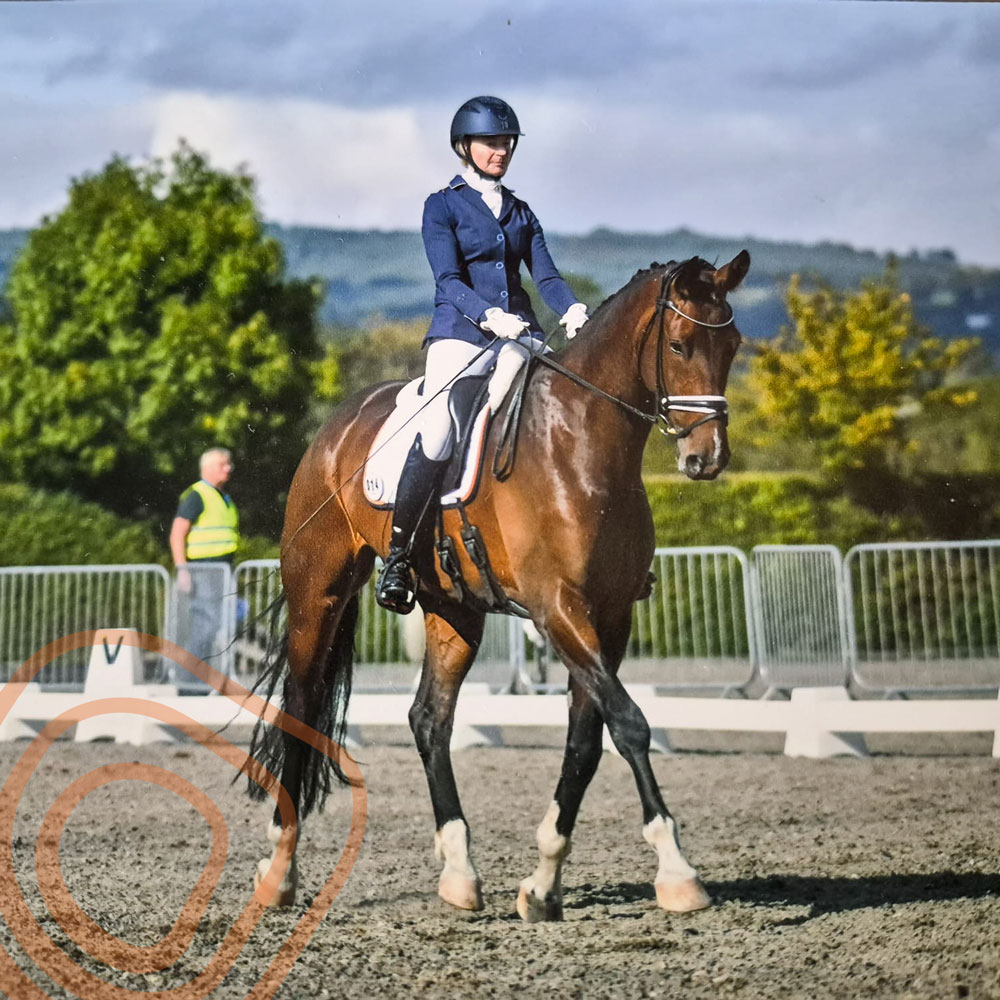
Iris Walshe is an AuDHD equestrian athlete, ADHD/AuDHD coach, and founder of NeuroWave Coaching. She has competed across showjumping, eventing, and dressage, and holds ADDCA, PAAC CACP, and ICF credentials. She works with neurodivergent athletes and high-performing adults at neurowavecoaching.com.
References
John, A., Stewart, G.R., Mandy, W. et al. (2026). Attention-Deficit/Hyperactivity Disorder in Children and Adults in England, 2000–2025. The Lancet Regional Health – Europe. University of Liverpool, King’s College London, UCL.
Department of Health and Social Care (2026). Independent Review into Mental Health Conditions, ADHD and Autism: Interim Report. GOV.UK. Published 10 June 2026.
Central Statistics Office Ireland (2025). Irish Health Survey 2025. CSO.ie.
Osianlis, E., Thomas, E.H.X., Jenkins, L.M., Gurvich, C. (2025). ADHD and Sex Hormones in Females: A Systematic Review. Journal of Attention Disorders, 29(9), 706–723. HER Centre Australia, Monash University.
Kooij, J.J.S., de Jong, M., Agnew-Blais, J. et al. (2025). Research Advances and Future Directions in Female ADHD: The Lifelong Interplay of Hormonal Fluctuations with Mood, Cognition, and Disease. Frontiers in Global Women’s Health, 6:1613628. Eunethydis Special Interest Group on Female ADHD.
Jakobsdóttir Smári, U., Valdimarsdottir, U.A., Wynchank, D. et al. (2025). Perimenopausal symptoms in women with and without ADHD: A population-based cohort study. European Psychiatry, 68(1), e133. doi:10.1192/j.eurpsy.2025.10101. Cohort of 5,392 women aged 35–55 (University of Iceland / Karolinska Institutet).