Wired for This: Neurodivergent Minds and the Workforce That Wasn’t Ready Chapter 5. The Infrastructure Lag
At some point in the last decade, awareness became the default answer to the neurodivergent workplace question.
Organisations ran training days. LinkedIn was filled with articles about ADHD strengths and autism superpowers. Hiring campaigns spoke about “embracing neurodiversity.” The conversation became louder, more visible, and in many ways more genuinely well intentioned than it had been at any previous point in living memory.
And yet the employment data barely moved.
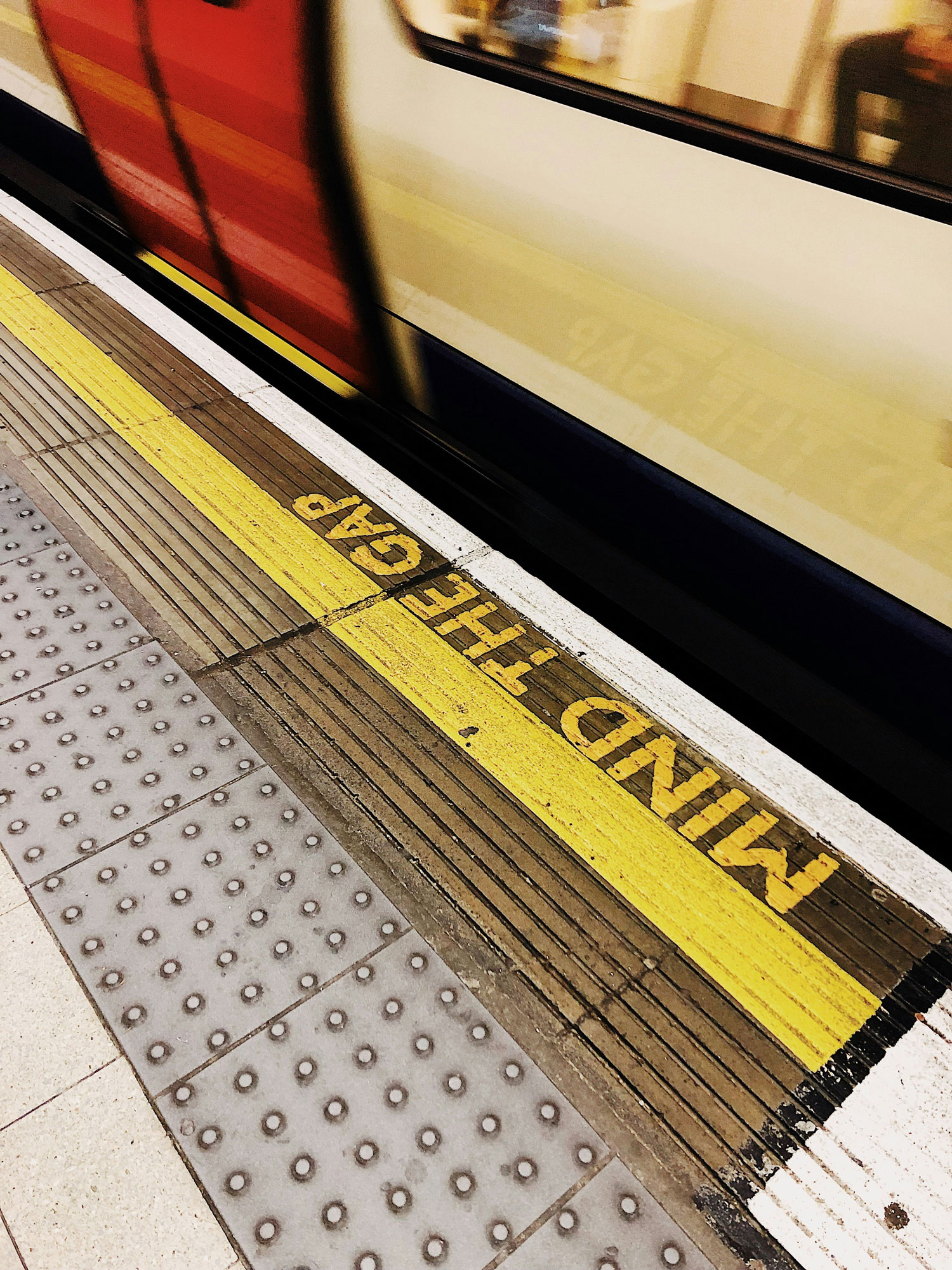
This is the infrastructure gap. It is the distance between what organisations say they value and what the systems they run are designed to produce. It shows up in the numbers, in the waiting lists, in the lived experience of neurodivergent people navigating workplaces that were built, like the classrooms before them, for a different kind of mind. And it carries a cost that most organisations have not yet begun to properly calculate.
What the Employment Data Shows
The employment picture for neurodivergent adults in Ireland and the UK is stark, and the Irish data is specific enough to be worth examining directly.
In 2021, IrishJobs.ie and Ireland’s national autism charity AsIAm published their Autism in the Workplace Report, surveying 234 autistic people and 110 businesses across Ireland. Almost four in five autistic people in Ireland reported facing barriers to getting the job they wanted. Less than 29% of organisations were employing, or even aware of employing, autistic individuals. And three in four employers (75%) said they believed their staff did not know enough about autism to support an autistic colleague. Seventy two percent of autistic respondents cited having to mask or hide their autistic traits to fit in with colleagues as one of the main barriers to finding the right role.
More recent Irish data tells the same story and adds a stark financial dimension. AsIAm’s Same Chance Report 2025, published on World Autism Awareness Day and drawing on the experiences of over 1,400 autistic people and their families, found that 86% still say they do not have the same chance as non-autistic people in Irish society. Seventy nine percent reported additional costs directly arising from being autistic or caring for someone who is, costs that research by Dr Áine Roddy at ATU Sligo places at between €10,000 and over €28,000 per year. Many families reported having to reduce their working hours or give up employment entirely. The barrier, in other words, is not only getting into work. It is the compounding financial and practical cost of navigating a world not built for you, a cost that falls on the household long before and long after the question of employment.
That last finding is significant, because it connects directly to what the research literature now shows about masking. The foundational study is a 2017 qualitative paper by Hull and colleagues at University College London and the University of Cambridge, published in the Journal of Autism and Developmental Disorders, which documented in granular detail what masking, or camouflaging, involves and what it costs. Drawing on the experiences of 92 adults with autism spectrum conditions across 15 countries, it found that masking combined suppression of natural traits with active mimicry of neurotypical behaviour, and that its consequences included exhaustion, threat to self-perception, and the erosion of a coherent sense of identity. That finding has held and deepened in the years since. A 2023 systematic review in Frontiers in Psychiatry and a 2025 systematic review in Development and Psychopathology both confirm that camouflaging is consistently associated with poor mental health outcomes including anxiety, depression and burnout, that it is more common in women, and, tellingly, that it increases with age, as a lifetime of adapting to a world not built for you accumulates. Recent work has also found that camouflaging is not unique to autism but is elevated in ADHD adults too. There is a biological thread here that connects directly back to Chapter 1. Masking is cognitively expensive. It runs on working memory, executive function and sustained emotional regulation, precisely the capacities that the oestrogen decline of perimenopause tends to compromise. Researchers have begun to describe what happens next as a double unmasking. The hormonal shift simultaneously strips away the scaffolding that kept traits manageable and depletes the cognitive reserves needed to keep masking them. In a landmark 2020 study in the journal Autism, tellingly titled “When my autism broke” perimenopausal autistic women described their lifelong coping strategies collapsing almost all at once. Women who had passed as neurotypical for forty of fifty years suddenly found they could not. They were frequently told they had depression or were burnt out, when what had happened was that the biological and cognitive cost of a lifetime of masking had finally exceeded what they had left to spend. It is one more reason the distress shows up most sharply in women during this time. These are not abstract descriptions, they are consistent, specific, and reported independently across thousands of participants who never met each other.
In the UK, the most current government data paints a consistent picture. The Buckland Review of Autism Employment, published by the UK Department for Work and Pensions in February 2024 and led by Sir Robert Buckland, found that only around three in ten autistic people in the UK are in any form of paid employment, compared with five in ten disabled people overall and eight in ten non disabled adults. The House of Commons Library briefing on autism policy, updated in 2026 using Annual Population Survey data for 2024/25, puts the autistic employment rate at 34%, still the lowest of any disabled group and less than half the rate for non-disabled people. Autistic graduates are twice as likely to be unemployed fifteen months after graduating as non-disabled graduates, with only 36% finding full time work. The National Autistic Society, citing the same data, reports that 77% of unemployed autistic adults want to work. The gap is not about motivation or capacity. It is about access and infrastructure.
And lest this be dismissed as a problem confined to lower paid or lower status work, consider medicine, a profession defined by rigour and high standards. A UK wide British Medical Association survey of 801 disabled and neurodivergent doctors and medical students, conducted in May 2025, found that 73% of those who needed reasonable adjustments had not received all of them, that 63% said this lack of support had been a direct barrier to their career progression, and that 53% had left the profession or seriously considered leaving in the previous two years. More than half felt ableism was worse inside medicine than in wider society. If this is the experience of qualified doctors, people who have already cleared every barrier the system could put in front of them, it tells you the problem is not the capability of the individual. It is the design of the environment, at every level.
What This Costs
The gap between neurodivergent potential and neurodivergent employment outcomes is not only a human cost, though it is emphatically that. It carries a measurable economic cost that has been documented at national level.
The NHS England Independent ADHD Taskforce, whose Part 1 report was published in June 2025, estimated that the economic costs of not treating ADHD run to around £17 billion annually, accounting for reduced tax contributions, higher rates of welfare dependency, higher costs to health, social care, and the criminal justice system, and the disproportionate rates of NEET status, not in education, employment or training, among those with undiagnosed or unsupported ADHD. The Lancet paper by John, Stewart, Mandy and colleagues, which we referenced in Chapter 1, made the connection explicit in its own discussion section. Undiagnosed ADHD is associated with barriers to education and employment and elevated rates of NEET status, and the paper identifies many of these outcomes as potentially preventable with timely diagnosis and appropriate support.
That phrase, potentially preventable, is worth sitting with. The economic argument for earlier diagnosis and better workplace support is not simply a compassionate one. It is a cost effectiveness argument. The cost of intervention is substantially lower than the cost of the downstream consequences of no intervention.
The Diagnostic Infrastructure Is Part of the Problem
The employment gap does not begin at the point of hiring. For many neurodivergent adults in Ireland, it begins at the point of trying to understand themselves and encountering a system that is not designed to help them do so.
The Irish diagnostic picture is more complicated than a simple public versus private binary, and worth being precise about. For adult ADHD, the HSE’s National Clinical Programme for ADHD in Adults does provide a public pathway via GP referral to Adult Mental Health Services, but as of 2025 only six of nine Community Health Organisations had funded specialist adult ADHD teams, leaving significant geographic gaps, with waiting times that can stretch to years even where a team exists. For adult autism, the HSE does not currently provide general adult assessments through the public system at all, meaning most adults seeking an autism diagnosis must access it privately. Private ADHD assessments currently cost in the region of €1,279, and comprehensive multidisciplinary autism assessments between €1,800 and €3,500. For people on lower incomes, for people in precarious employment, for people whose neurodivergent profile has already disrupted their career and earnings trajectory, this is a prohibitive barrier. The result is a diagnostic infrastructure that is not neutral but stratified by both geography and income in a way that compounds the disadvantage of the very people it most needs to reach.
The waiting list situation for children and young people is equally severe. As documented in the DHSC Independent Review for England, and reflected in broadly similar patterns in Ireland, the queue for assessment has grown dramatically in recent years. Children waiting years for a diagnosis are spending those years in schools and eventually workplaces that cannot appropriately support what they cannot yet name.
Why Awareness Alone Does Not Close the Gap
The IrishJobs.ie and AsIAm findings from 2021 revealed something that more recent research has confirmed repeatedly. Awareness of neurodivergence and the actual capacity to support neurodivergent employees are not the same thing and do not move together automatically.
In 2022, a UK survey cited across multiple workplace research papers found that a lack of appropriate support and understanding, rather than neurodivergent traits themselves, was the primary barrier to workplace inclusion. Three quarters of Irish employers said their staff lacked the knowledge to support autistic colleagues, while simultaneously the majority said they believed their hiring processes were accessible. There is a significant gap between what organisations believe about their own systems and what those systems actually produce for neurodivergent people inside them.
Petty, Tunstall, Richardson and Eccles, writing in the Journal of Autism and Developmental Disorders, examined what workplace adjustments for autistic employees would constitute reasonable and effective support, drawing on qualitative research with autistic adults and employers. Their findings were not exotic or expensive. They were autism awareness training, low stimulus workspaces, clear and explicit communication of expectations, and flexible working arrangements. The barriers to implementing these were not primarily financial. They were primarily cultural and structural, rooted in workplace norms that had never been designed with cognitive diversity in mind, and that most organisations had not explicitly examined.
This is the infrastructure lag in its most practical form. The adjustments that would make a material difference to neurodivergent employees’ ability to contribute fully are known, documented, and largely affordable. What is missing is not the knowledge of what to do. What is missing is the organisational will and the systemic accountability to do Vit.
The Gap Is Getting More Expensive to Ignore
Something has shifted in the last few years that changes the economics of this situation for employers.
The labour market the economy described in Chapter 3 now depends on is one in which nonroutine cognitive work is the growing category of demand. The skills associated with that category, pattern recognition, divergent problem solving, the ability to operate in ambiguous and under specified conditions, are not evenly distributed across the population, and they are not reliably produced by standard educational and professional development systems. The pool of people who have them, naturally and demonstrably, includes a significant proportion of neurodivergent adults who are currently underemployed, underdiagnosed, or operating below their capacity inside systems not designed to see them accurately.
The cost of the infrastructure lag is no longer just a human cost, though it has always been that. It is increasingly a strategic cost. And the question facing organisations, and the systems around them, is no longer whether they can afford to close the gap. It is whether they can afford not to.
Iris Walshe is an AuDHD equestrian athlete, ADHD/AuDHD coach, and founder of NeuroWave Coaching. She has competed across showjumping, eventing, and dressage, and holds ADDCA, PAAC CACP, and ICF credentials. She works with neurodivergent athletes and high-performing adults at neurowavecoaching.com.
References
IrishJobs.ie and AsIAm (2021). Autism in the Workplace Report. Survey of 234 autistic people and 110 businesses in Ireland.
AsIAm (2025). Same Chance Report 2025. Ireland’s National Autism Charity. Survey of over 1,400 autistic people and families. Annual additional-cost figures (€10,000 to €28,000+) attributed to Dr Áine Roddy, ATU Sligo.
Hull, L., Petrides, K.V., Allison, C., Smith, P., Baron-Cohen, S., Lai, M.C., Mandy, W. (2017). Putting on My Best Normal: Social Camouflaging in Adults with Autism Spectrum Conditions. Journal of Autism and Developmental Disorders, 47(8), 2519–2534. Foundational qualitative study of 92 adults.
Alaghband-Rad, J. et al. (2023). Camouflage and masking behaviour in adult autism. Frontiers in Psychiatry, 14:1108110. Systematic review confirming association between camouflaging and poor mental health outcomes.
Klein, J. et al. (2025). A systematic review of social camouflaging in autistic adults and youth. Development and Psychopathology, 37(3), 1320–1334. Confirms camouflaging is more common in females and associated with mental health risk.
Buckland Review of Autism Employment (2024). Report and Recommendations. UK Department for Work and Pensions. Led by Sir Robert Buckland KC MP.
British Medical Association (2025). Disability and Neurodivergence in the Medical Profession. UK-wide survey of 801 disabled and neurodivergent doctors and medical students, conducted 2–27 May 2025. Interim findings published August 2025; full report December 2025.
House of Commons Library (2026). Autism Policy and Services: Employment Briefing. DWP Annual Population Survey 2024/25 data.
NHS England (2025). Report of the Independent ADHD Taskforce: Part 1 (June 2025). Economic costs of not treating ADHD estimated at approximately £17 billion annually. Note: this is a distinct body from the Fonagy-chaired DHSC Independent Review.
John, A., Stewart, G.R., Mandy, W. et al. (2026). ADHD in Children and Adults in England, 2000–2025. The Lancet Regional Health – Europe.
Department of Health and Social Care (2025–2026). Independent Review into Mental Health Conditions, ADHD and Autism: Interim Report. Chaired by Professor Peter Fonagy. Reviews services in England (health policy is devolved). GOV.UK.
Petty, S., Tunstall, L., Richardson, H., Eccles, N. (2023). Workplace Adjustments for Autistic Employees: What is ‘Reasonable’? Journal of Autism and Developmental Disorders, 53(1), 236–244. (First published online January 2022.) York St John University and University of York.