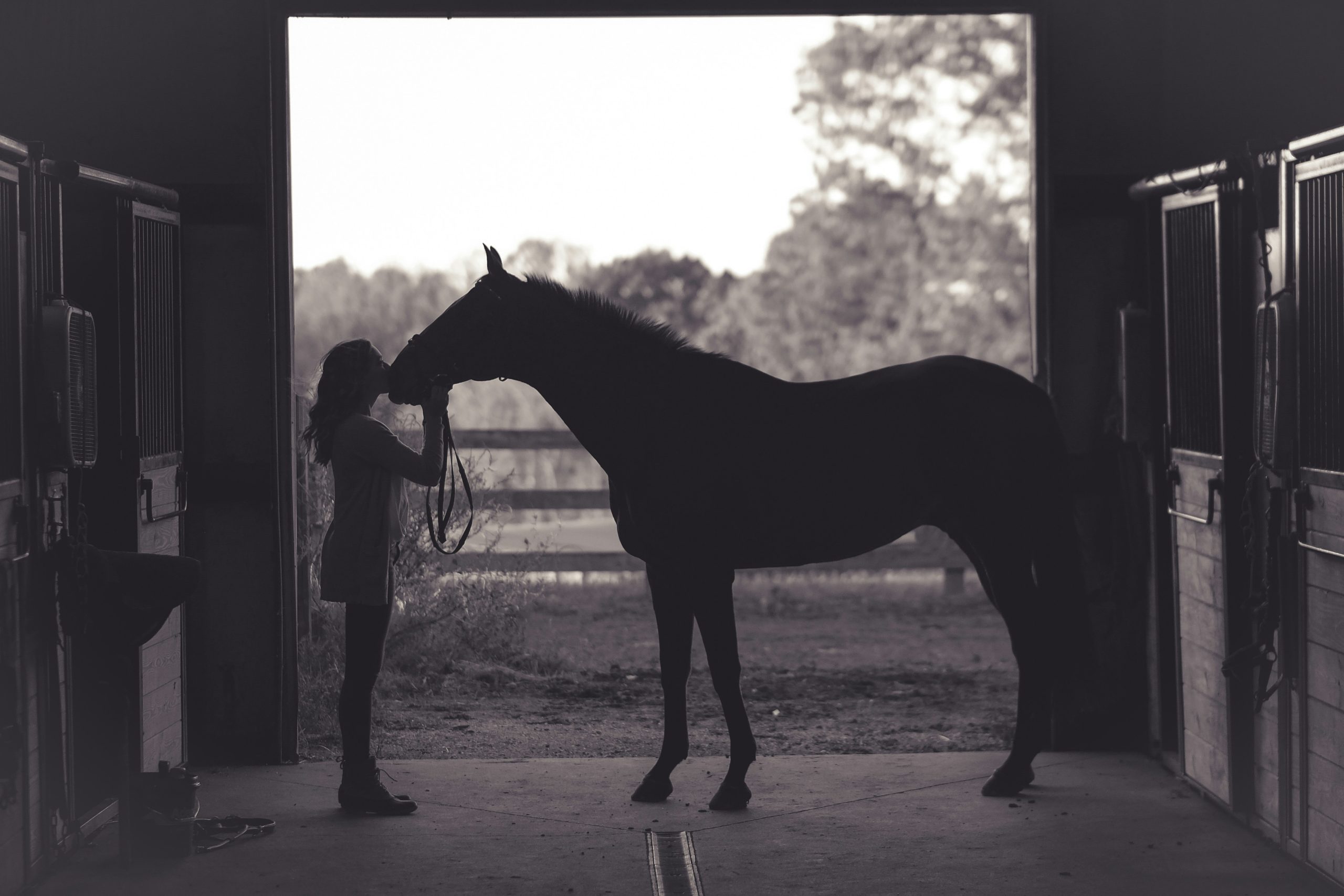
Is there a natural bond between neurodivergent people and horses and if so, why?
I’ve sat with that question for a long time. I knew the answer instinctively . I’ve lived it for thirty years across a competition career and a coaching practice that spans both worlds. But knowing something in your body and being able to explain it with rigour are two different things.
This article is my attempt to do both.
What follows is about Rejection Sensitive Dysphoria ,what it is, what it does to the nervous system, and why the horse, of all animals, might be the most precise mirror neurodivergent people have ever encountered. Not as a metaphor. As neuroscience.
First: What RSD Actually Is
Rejection Sensitive Dysphoria, or RSD, describes an intense emotional pain triggered by real or perceived rejection, criticism, or failure. The term was popularised by psychiatrist Dr. William Dodson, who developed it through decades of clinical work with ADHD patients. It has since become one of the most widely recognised — and most discussed — experiences among neurodivergent adults.
I want to be transparent about the research landscape: RSD does not yet have a formal DSM diagnosis, and the evidence base is still developing. The first large-scale qualitative study on RSD in neurodivergent adults was published in 2025 (Sandland, 2025). We do not yet have a validated measurement tool. The field is catching up with what clinicians and neurodivergent people have been describing for decades.
That does not make it less real. It makes it exactly like most things in the neurodivergent experience: lived long before it was named.
What we do have is a clear clinical picture of how it presents, and a growing body of neurobiological research that explains why it hits so hard.
The Neurodivergent Nervous System: Built for Alert
Research indicates that up to 99% of adolescents and adults with ADHD report feeling the impact of rejection sensitivity, with approximately one in three identifying it as the most difficult aspect of their ADHD experience (Dodson, W.W., interview research). For autistic people and those who are AuDHD, the figures are comparably high.
This is not a character flaw. It is a neurological pattern.
The ADHD and autistic nervous system is, at its core, a highly sensitive threat-detection system. Where the neurotypical nervous system filters sensory and social information, calibrating it against context, the neurodivergent nervous system processes more — and often with greater intensity. Neurodivergent individuals frequently possess more sensitive nervous systems, resulting in heightened reactions to stressors. The distinctive neural pathways associated with ADHD and autism can produce black-and-white emotional processing, making people susceptible to intense swings between safety and alarm.
When a neurodivergent person exits their window of tolerance, the body mobilises for action. The sympathetic nervous system becomes highly active. Heart rate elevates. Vigilance sharpens. The body prepares, not because the threat is necessarily real, but because the nervous system has learned — through accumulation of painful experience — that rejection often follows difference.
A lifetime of being told you are too much, too sensitive, not trying hard enough, teaches the nervous system to stay on high alert. Social evaluation becomes, neurologically speaking, a predator.
A 2023 qualitative study (Ginapp et al.) described RSD as deeply somatic — experienced through the entire body , with rumination persisting for hours or days after even subtle social slights. Research from the neurodivergent community articulates this plainly: “It’s not that we’re overreacting , it’s that our brains and bodies feel social pain with the same intensity others feel physical pain.”
The Horse’s Nervous System: Also Built for Alert
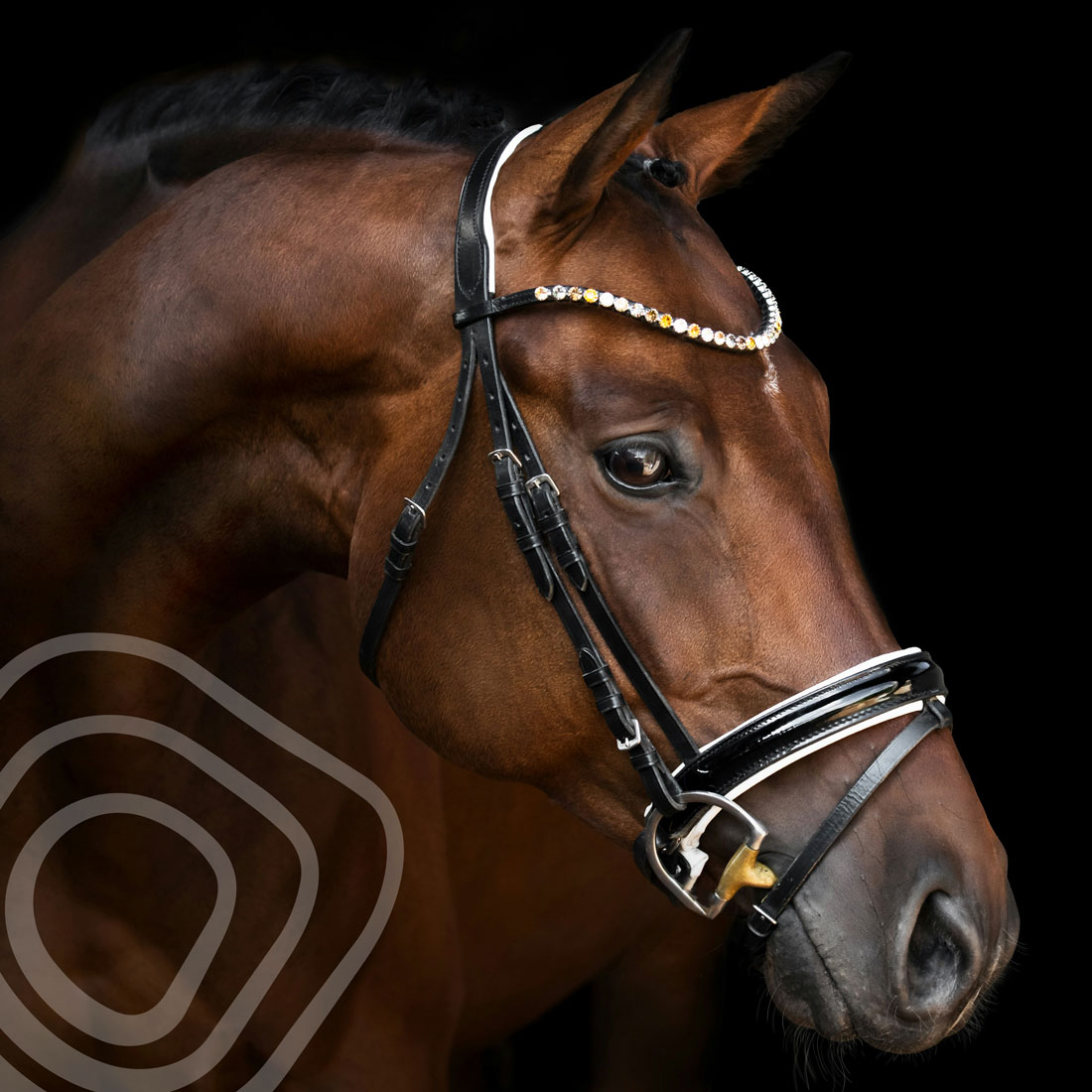
Now let’s talk about horses. Horses evolved from small mammals whose survival depended entirely on one thing: fleeing from predators before they were caught. They are prey animals. Their nervous system was not designed for rest. It was designed for rapid, accurate threat detection, and for the speed of response that comes after it.
The fight-or-flight reaction in horses begins in the amygdala ,the brain’s emotional processing and fear generation centre , which triggers a cascade through the hypothalamus, pituitary gland, and adrenal system, releasing adrenaline and norepinephrine into the bloodstream. When threatened, a horse may first freeze , the body paused, scanning , before exploding into flight. This is not stupidity. This is a survival system operating exactly as it was built.
High sensory sensitivity is not incidental to horses. It is the point. Horses use visual, auditory, and olfactory cues simultaneously to detect threat. Their hearing range exceeds ours significantly; they can rotate their ears independently, triangulating sound. Their wide-angle vision gives them a panoramic field of nearly 350 degrees. They feel the vibration of the ground. In the wild, the horse who noticed first lived.
As one researcher in equine neuroscience writes: horses are constantly aware of potential dangers and have developed excellent abilities to recognise perceived threats. The fear response can be extremely diverse in quality and intensity , some horses are constitutionally more reactive, some more stoic. But the underlying wiring is the same.
Sound familiar?
The Same Amygdala, the Same Problem
Here is where the parallel becomes neurobiological rather than metaphorical.
Both the neurodivergent nervous system and the equine nervous system are governed by the same fundamental structure: the amygdala-hippocampal circuit. The amygdala processes emotional threat. The hippocampus encodes the memory of that threat. Together, they ensure that what hurt once is remembered and that the body responds to its echoes long after the original event has passed.
In horses, this is why a horse who was once badly frightened in a particular arena can spook in that space years later. The memory is not cognitive. It is somatic. The body knows before the mind can reason.
In neurodivergent people with RSD, the mechanism is identical. A single episode of public humiliation, sudden criticism, or unexpected rejection can be encoded with the full neurochemical intensity of a physical threat. The amygdala stamps it. The hippocampus files it. The body holds it. The next time something even slightly similar appears on the horizon a shift in tone, a silence that lasts a beat too long, feedback delivered without warmth , the nervous system mobilises before the conscious mind has finished reading the situation.
This is not weakness. This is the cost of a nervous system designed for survival.
Personality Is Not a Disorder In Either Species
One of the most important things I want to say in this article is this: neurodivergent people are not a monolith, and neither are horses.
Research on equine personality consistently measures traits including fearfulness, confidence, boldness, extraversion, reactivity, gregariousness, sensory sensitivity, and motivation. Individual differences in horses’ responses to the same stimulus are so well-documented that the differences are simply termed personality. Some horses are constitutionally brave, curious, and gregarious. Others are more introverted, more sensitive, more cautious of new environments. Some are stoic under pressure. Some are exquisitely reactive to the emotional state of those around them. Some want to please so much they will work through pain, fatigue, and fear to do so , to their own detriment.
If you work with neurodivergent people, or if you are one, that list will feel recognisable.
Like horses, neurodivergent people span a vast range of temperament. Some are extroverted, high-energy, brimming with sociability. Some need time alone to process, and find the company of too many people physically exhausting. Some are bold, some are cautious. Some appear stoic while their interior world is in constant motion. Some are exquisitely empathic, reading the emotional weather of a room the moment they walk in. And many , have a tendency to push past their own needs to meet the needs of others, until something breaks.
These are not deficits. They are variations. Research has not produced a single unified personality structure for either horses or neurodivergent humans because nature does not produce one. It produces range.
The Herd Is Not Optional
For a prey animal, belonging is not a preference. It is a biological imperative.
Research on equine social isolation is unambiguous. Individually housed horses show significantly elevated heart rates, more frequent stress behaviours, and marked drops in immune cell counts ,effects not seen in horses living within a herd, even one that changes in composition. It is isolation, not social change, that causes the damage. The horse needs the herd not for comfort, but for neurological regulation. In the herd, the burden of vigilance is shared. No single animal has to monitor every direction simultaneously. Safety is distributed.
Research also shows that horses seek out specific preferred partners during times of stress , engaging in mutual grooming (allogrooming) with particular individuals, not just any available horse. This is the equine version of safe attachment. The herd provides co-regulation. The bonded pair provides something more specific: felt safety with a known other.
For neurodivergent people, the neurobiological need for genuine belonging is equally profound and equally frequently unmet. RSD is, at its core, a terror of exclusion from the herd. The anticipatory dread of being too much, too different, too hard to understand, to maintain connection with. The social rejection that neurodivergent people fear is not abstract. It is, neurologically, a threat to survival. The nervous system does not distinguish between being cast out of the group chat and being left alone on the plains.
This is why finding your people, genuinely, not performatively ,changes everything.
Why Neurodivergent People Just Get Horses
Now. The question.
I want to be honest here there is no single peer reviewed study that directly maps the neurodivergent nervous system onto the equine one and concludes that is why the connection exists. That specific research has not been done yet. What I am offering here is a clinically grounded synthesis ,my reading of converging evidence across equine neuroscience, neurodivergent research, and thirty years of standing at the intersection of both.
Here is what I believe is happening.
First: horses don’t accept masks.
Neurodivergent people, particularly autistic and AuDHD people, spend enormous energy masking , suppressing natural behaviour to appear more socially acceptable. Mimicking eye contact, scripting conversations, forcing smiles, copying tone. Research consistently documents the physical and emotional cost of this: fatigue, pain, depersonalisation, and a profound loneliness that comes from being accepted only as the performance, never as the person.
Horses cannot be masked to. They read everything .
Research suggests that horses possess the ability to read human emotional states through the recognition of emotional cues, possibly facilitated by mirror neurons. They monitor body language, breathing patterns, energy levels, and micro-signals of tension in the body. What they look for, fundamentally, is coherence: does what you feel match what you show? If it does not, the horse detects the inconsistency and responds with distance, alertness, or refusal to engage. Not with judgement. Just with truth.
For a neurodivergent person who has spent a lifetime being rewarded for the mask and unseen behind it, the horse’s response to the real signal not the performed one can be quietly shattering. And quietly healing.
Second: horses communicate the way neurodivergent people naturally do.
The human social world runs on neurotypical communication conventions: indirect language, social scripts, implication, hierarchy of verbal over non-verbal. Neurodivergent people often find this exhausting and opaque. Many struggle with neurotypical non-verbal cues while being exquisitely sensitive to energy, microexpressions, tone, and somatic signals.
Horses communicate almost entirely in the language neurodivergent people are already fluent in: body, energy, proximity, pressure, and release. No subtext. No social performance. No requirement to decode what is said against what is meant. The horse says what it means with its whole body.
Research notes that horses can cross-modally recognise human emotions ,matching facial expressions to vocal tone, responding physiologically to anger versus joy in human voices. Horses remember the emotional expressions of individual humans and adjust their behaviour accordingly in future interactions. They are not responding to words. They are responding to the actual state of the person in front of them.
For many neurodivergent people, being responded to accurately — not to the mask, but to the truth of what they are actually feeling , is rare. The horse does it naturally, without effort, and without agenda.
Third: both nervous systems recognise each other.
This is the part I feel most clearly and can evidence least directly. But I think it matters, so I will say it.
A highly sensitive nervous system, finely tuned for threat detection, is likely to resonate with another highly sensitive nervous system tuned for the same thing. Not consciously. Not cognitively. But at the level of shared frequency.
The neurodivergent person who walks into a yard already knows which horse is anxious before anyone tells them. They feel the tension in the air. They notice the slight holding in the breath, the flick of an ear, the quality of stillness that is not peace but the freeze before flight. They know it because their own body knows that state from the inside.
And the horse, for its part, is likely encountering something it rarely meets in the human world: a person whose nervous system is genuinely, honestly present , not performing calm while radiating stress, but actually calibrated to the same level of sensitivity.
That recognition, when it happens, is real. And it is the beginning of everything.
When Safety Is Real, Everything Opens
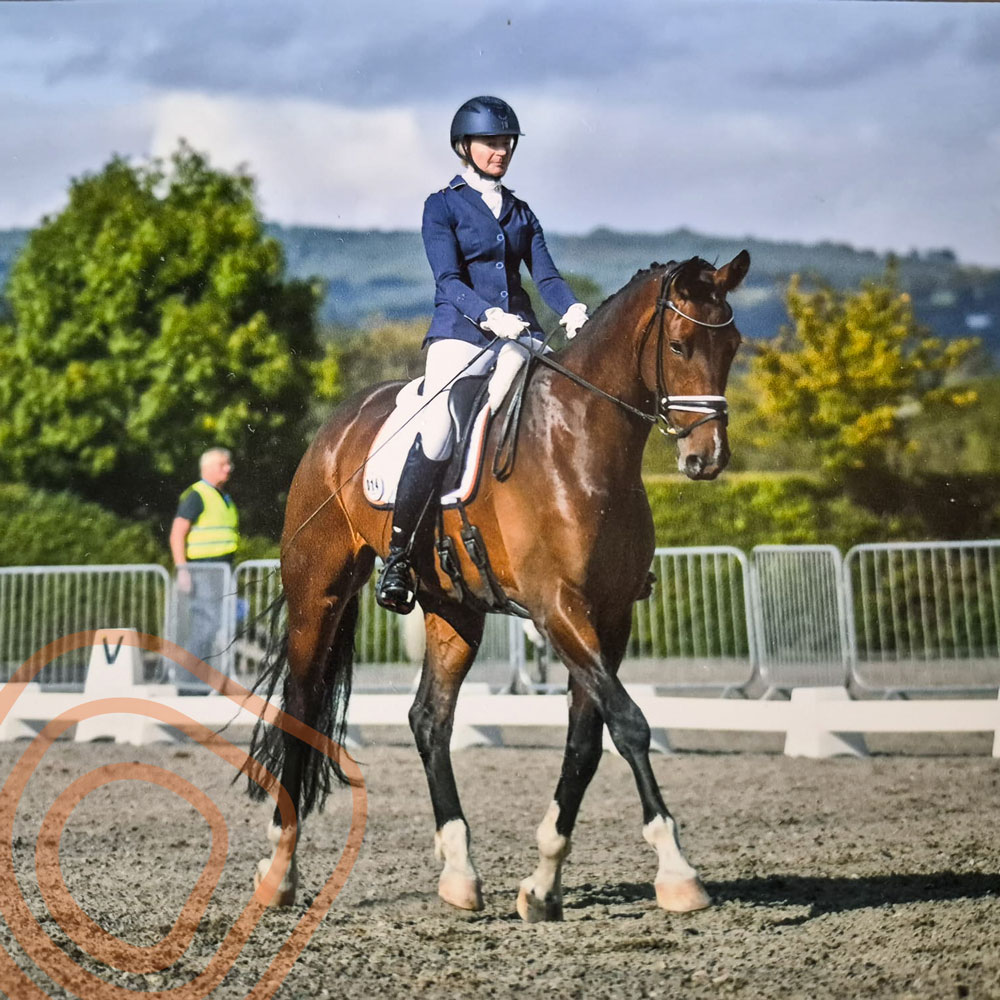
Horses do not thrive under chronic stress. The research on isolation, on suppressed immune function, on elevated cortisol, on the physiological cost of sustained sympathetic activation ,it tells us that a horse kept in a state of permanent vigilance cannot access its full capacity. The brave horse, the learnable horse, the horse who can carry you through a Prix St Georges test or over a cross-country course that horse needs to feel genuinely safe to offer what it has.
The same is true of neurodivergent people.
RSD is not a character defect. It is what happens when a sensitive nervous system has been conditioned, across years, to expect rejection, criticism, and exclusion. The nervous system learns to protect itself. It withdraws, or it overreacts, or it masks. It stops offering the fullness of itself because the fullness of itself has been found to be too much.
But when safety is real , not performed, not conditional, not contingent on suppressing the truest parts of who you are , the neurodivergent person, like the horse, will show you what they are actually capable of.
Recent research has given that state a name. A 2026 paper published in Applied Animal Behaviour Science proposed that horses can experience flow, the same optimal performance state described in humans psychology , characterised by full absorption , effortless execution , and positive affect. The researchers built an equine specific model of flow organised around reward , engagement and the release of frustration, emerging across phases of struggle , release, flow and recovery. They noted that flow in horses may be particularly relevant to complex , fluid movement , dressage being the clearest example and that it may facilitate precision learning and continuous refinement under the right conditions.
The right conditions . That is the key phrase . Flow in horses and in Neurodivergent people, is not accessible under chronic stress, vigilance or threat. It requires exactly what this article has been building toward, genuine safety , honest communication and a nervous system that finally has been allowed to exhale. When that condition exists , both stop surviving and start becoming who they actually are.
Every person who comes to horses comes first for the love of them. The connection, the presence of them, the particular quality of being known by an animal who neither needs you nor owes you and yet chooses you anyway. That is the beginning. When the match is right , when the trust is real, when the communication is honest, when the nervous system can finally exhale all the possibilities open.
I have seen it with horses. I see it every day with clients.
The wiring is the same. The need is the same. And so, it turns out, is the way home.
Iris Walshe is an AuDHD equestrian athlete, ADHD/AuDHD coach, and founder of NeuroWave Coaching. She has competed across showjumping, eventing, and dressage, and holds ADDCA, PAAC CACP, and ICF credentials. She works with neurodivergent athletes and high-performing adults at neurowavecoaching.com.
References
Dodson, W.W. (2016). Emotional Regulation and Rejection Sensitive Dysphoria in ADHD. Psychiatric Times; ADDitude Magazine clinical interview series.
Ginapp, C.M., et al. (2023). The experiences of adults with ADHD in interpersonal relationships and society: A qualitative synthesis. PLOS One, 18(2).
Sandland, S. (2025). Rejection Sensitive Dysphoria in neurodivergent adults: A qualitative study of lived experience. [First large-scale qualitative study on RSD.]
Proops, L., Grounds, K., Smith, A.V., & McComb, K. (2018). Animals remember the emotional valence of past interactions. Current Biology, 28(4).
Smith, A.V., et al. (2016). Functionally relevant responses to human facial expressions of emotion in the domestic horse. Biology Letters, 12(2).
Trösch, M., et al. (2019). Horses categorize human emotions cross-modally based on facial expression and non-verbal vocalizations. PMC6912773. Scientific Reports.
Hausberger, M., et al. (2008). A review of the human-horse relationship. Applied Animal Behaviour Science, 109(1).
Ijichi, C., et al. (2013). Harnessing the power of personality assessment: equine personality. Equine Veterinary Journal, 45.
Cage, E., et al. (2023). The workplace masking experiences of autistic, non-autistic neurodivergent and neurotypical adults. PLOS One. DOI: 10.1371/journal.pone.0290001
Siegel, D.J. (2012). The Developing Mind (2nd ed.). Guilford Press. [Mirror neuron systems and intersubjectivity.]
Hawson,L., et al. (2026). Evaluating the functionality and mechanisms of flow for horses (Equus caballus) through existing frameworks. Applied Animal Behaviour Science DOI ; 10.1016/ j.applanim.2026.001486A